Skip to content

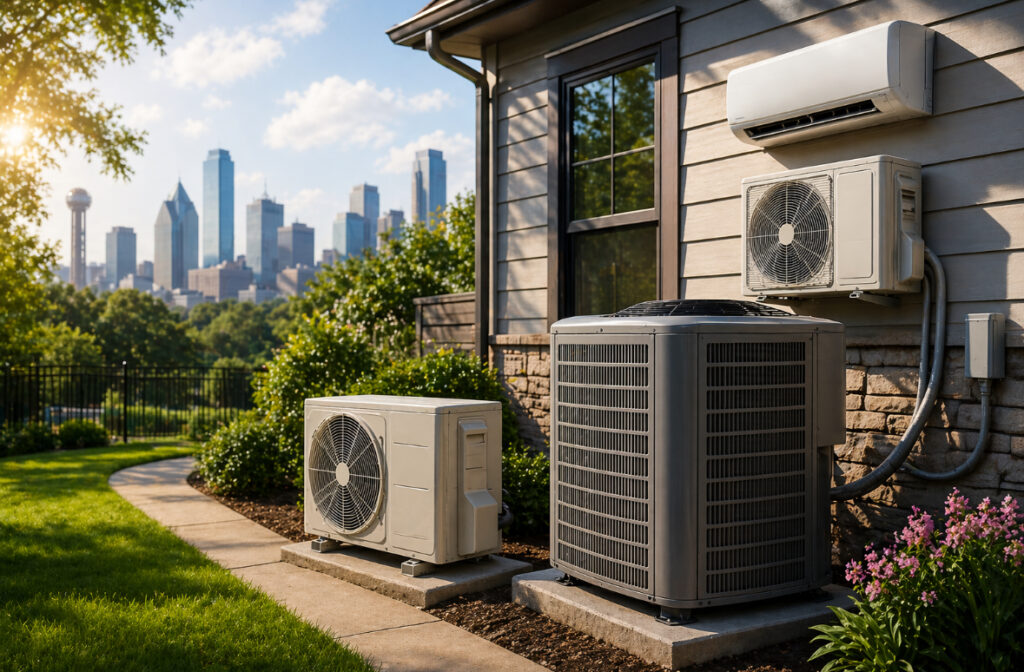
In Dallas, summer doesn’t just raise temperatures, it exposes how well your HVAC system actually performs. Many homeowners notice longer cooling cycles, uneven room temperatures, and rising energy bills once the heat intensifies. The real challenge isn’t just cooling your home, but doing it efficiently without overworking the system.
Choosing the right HVAC setup depends on more than just system type. Factors like duct condition, home layout, insulation, and runtime demand all influence performance. This guide breaks down how different systems handle Dallas heat and helps you determine which option delivers consistent comfort while keeping energy use under control.
How Dallas Summer Conditions Impact HVAC System Performance

When Dallas summer temperatures routinely soar past 100°F and humidity levels spike, your HVAC system faces far more than just a basic cooling challenge. These extreme conditions mean your AC runs long daily cycles—sometimes 12 to 16 hours—pushing system components to their limits. High humidity adds extra strain, as your system must remove moisture from the air to keep you comfortable, not just cool. Attic heat buildup and intense sun exposure on rooftops can raise indoor temperatures even higher, especially in homes with poor insulation or aging ductwork.
If you live in an older Dallas home, leaky ducts may waste 20–30% of cooled air, further reducing efficiency. Ultimately, local climate factors force your system to work harder, emphasizing the need for optimal performance and reliability. Choosing energy-efficient systems is crucial in these conditions, as they help lower utility bills and maintain consistent indoor comfort despite the harsh Dallas summers.
Types of HVAC Systems Used in Dallas Homes
In Dallas, HVAC performance depends on how well a system handles extreme heat, long cooling cycles, and home-specific challenges like attic temperatures and airflow distribution. Different systems respond differently under these conditions. Understanding how each option performs helps homeowners choose a system that maintains comfort, controls energy use, and operates reliably during peak summer demand.
Central Air Conditioning Systems
Central AC systems remain the most common choice in Dallas, especially in homes with existing ductwork. They are designed to cool the entire home through a single system, but performance depends heavily on duct condition and proper sizing. In high-heat environments, inefficiencies in airflow or insulation can significantly reduce effectiveness.
- Whole-home cooling – Designed to cool entire living spaces efficiently when airflow and duct systems are properly optimized
- Duct dependent – Performance drops when ducts run through hot attics or have leaks reducing airflow efficiency
- Humidity control – Longer cooling cycles help remove excess moisture, improving comfort during humid summer conditions
- Sizing critical – Requires accurate load calculations to prevent short cycling and ensure consistent cooling performance
Ductless Mini Split Systems
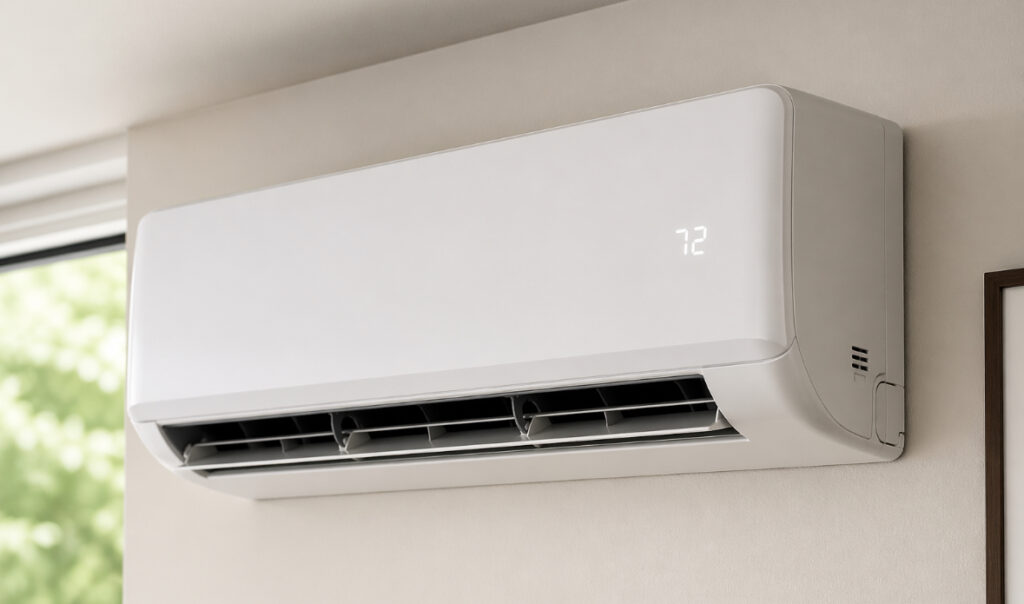
Ductless mini splits are becoming increasingly popular in Dallas due to their ability to deliver targeted cooling without relying on ducts. These systems are especially effective in homes with uneven temperatures, additions, or spaces where traditional ductwork limits airflow and efficiency.
- Zone control – Allows independent temperature settings for each room, improving comfort and reducing unnecessary cooling
- No duct loss – Eliminates energy loss typically seen in duct systems, improving overall cooling efficiency
- High efficiency – Operates with higher SEER2 ratings, reducing energy consumption during extended summer use
- Flexible install – Ideal for older homes, room additions, and areas where duct installation is not practical
High-Efficiency Heat Pumps
High-efficiency heat pumps provide both cooling and heating, making them a versatile option for Dallas homeowners. These systems are designed to maintain steady performance even during extreme summer conditions by adjusting output based on real-time cooling demand.
- Dual function – Provides both cooling and heating from a single system, reducing the need for separate equipment
- Variable speed – Adjusts compressor output to maintain consistent indoor temperatures and reduce energy waste
- Energy savings – Uses less energy during long cooling cycles compared to traditional fixed-output systems
- Rebate eligible – Often qualifies for local utility incentives and federal tax credits for energy-efficient upgrades
Zoned Cooling Systems
Zoned HVAC systems improve comfort by dividing the home into separate areas that can be controlled independently. This approach is especially useful in Dallas homes with multiple floors, large layouts, or rooms exposed to direct sunlight.
- Multi-zone control – Uses multiple thermostats to manage temperatures across different areas of the home
- Reduced waste – Avoids cooling unused spaces, lowering overall energy consumption during peak summer
- Better balance – Helps eliminate hot and cold spots caused by uneven airflow distribution
- System flexibility – Can be integrated with both central AC and ductless systems depending on home design
Central AC vs Ductless vs Heat Pump: What Works Best in Dallas

In Dallas, choosing between central AC, ductless mini splits, and heat pumps depends on how well each system handles extreme heat, long runtime hours, and home-specific airflow challenges. Each option performs differently under real conditions like attic heat, duct efficiency, and room layout. Understanding these differences helps you choose a system that maintains comfort without increasing energy costs.
Central AC Performance Factors
Central AC systems are effective for whole-home cooling, but their performance in Dallas depends heavily on duct condition and system sizing. In many homes, ducts running through hot attics reduce efficiency, especially during long cooling cycles.
- Whole coverage – Designed to cool entire homes but relies on balanced airflow and sealed duct systems
- Duct losses – Up to 20–30% energy loss in poorly insulated or leaking ductwork in high-heat attics
- Humidity control – Longer cycles help remove moisture but increase system workload during peak summer
- Sizing accuracy – Requires Manual J calculation to prevent short cycling and uneven cooling issues
Ductless Mini Split Adaptability
Ductless systems provide a different approach by focusing on targeted cooling instead of whole-home airflow. This makes them effective in homes with uneven temperatures or areas that central systems cannot handle efficiently.
- Zone cooling – Controls temperature room-by-room, improving comfort in problem areas like upstairs spaces
- No duct loss – Eliminates energy waste caused by duct leakage, improving efficiency in older homes
- High efficiency – Operates with higher SEER2 ratings, reducing energy usage during long runtime hours
- Flexible install – Works well for additions, garages, and areas where ductwork is not practical
Heat Pump Summer Efficiency
Modern heat pumps offer an energy-efficient alternative by adjusting output based on cooling demand. They perform well in Dallas when properly installed and paired with good insulation and airflow design.
- Variable output – Adjusts cooling capacity to maintain stable temperatures during extended heat exposure
- Energy savings – Uses less electricity compared to traditional systems under continuous operation
- Dual purpose – Provides both cooling and heating, reducing the need for separate systems
- Installation dependent – Requires proper sizing and duct evaluation to maintain efficiency in high heat
System Comparison: What Matters Most in Dallas
| Factor | Central AC | Ductless Mini Split | Heat Pump |
|---|---|---|---|
| Cooling Coverage | Whole-home cooling through ducts | Targeted room-by-room cooling | Whole-home cooling with flexible output |
| Efficiency in Heat | Moderate, depends on duct condition | High, no duct losses | High when properly sized and installed |
| Energy Loss | 20–30% through ducts in many homes | Minimal energy loss | Moderate if ducts are inefficient |
| Installation Flexibility | Limited to homes with ducts | Highly flexible for any layout | Requires duct system or proper setup |
| Best Use Case | Large homes with good ductwork | Older homes, additions, uneven cooling | Newer homes with efficient insulation |
This comparison shows that no single system fits every home. In Dallas, the best choice depends on your home’s layout, duct condition, and how effectively your current system handles extreme summer demand.
Key Factors That Determine the Right HVAC System for Your Home
In Dallas, selecting the right HVAC system starts with understanding how your home handles heat. Factors like insulation quality, attic ventilation, and window efficiency directly affect how much cooling your system needs to deliver. Older homes often deal with duct leakage and airflow issues, while newer homes may require zoning to maintain even temperatures across different areas, especially during long summer cycles.
System efficiency and proper sizing also play a critical role in performance. Choosing a unit with a higher SEER2 rating helps reduce energy costs during extended cooling periods, but efficiency depends on correct installation. A Manual J load calculation ensures the system is sized accurately, preventing short cycling or underperformance. Working with a qualified HVAC contractor who follows EPA and ENERGY STAR guidelines ensures your system operates reliably under Dallas’s extreme conditions.
Common Cooling Problems in Dallas Homes and How System Choice Affects Them
In Dallas, cooling issues are rarely caused by a single failure. Most problems come from how systems handle extreme heat, humidity, and airflow under long runtime conditions. Choosing the right HVAC system directly affects how well these challenges are managed. Understanding these factors helps prevent inefficiency, uneven cooling, and unnecessary system strain.
Extreme Heat Load Management
Dallas homes face continuous heat exposure from attics, roofing, and direct sunlight, pushing systems to run 10–16 hours daily. If the system is not sized using a Manual J calculation, it may struggle to maintain temperature during peak heat. High SEER2 central systems handle sustained loads, but duct losses reduce efficiency. Ductless and variable-speed systems perform better by adjusting output based on demand, improving stability under extreme conditions.
Humidity Control Challenges
Humidity in Dallas reduces comfort even when temperatures are controlled. Systems that are oversized or single-stage often fail to remove enough moisture, leaving indoor air damp. Variable-speed systems run longer at lower capacity, improving dehumidification. Ductless systems also include dedicated dry modes for targeted moisture control. In high-humidity homes, adding a whole-home dehumidifier improves comfort and reduces system workload.
Ductwork Efficiency Issues
Duct performance directly impacts system efficiency, especially in homes with attic-installed ductwork. Leaks or poor insulation can result in 20–30% air loss, reducing cooling output before it reaches living areas. Even high-efficiency systems cannot perform properly if airflow is restricted. A professional duct inspection, sealing, and insulation upgrade are often required to restore efficiency and maintain consistent cooling.
Zoning and Room Balance
Uneven cooling is common in Dallas homes with multi-story layouts or sun-exposed rooms. Without zoning, a single thermostat cannot balance temperatures across all areas. This leads to hot spots and overcooling in other rooms. Systems with zoning controls or ductless setups allow independent temperature adjustment, improving comfort while reducing unnecessary energy use during long summer cycles.
Energy Efficiency, SEER Ratings, and Long-Term Cost Savings
A high-efficiency HVAC system isn’t just a luxury in Dallas—it’s a necessity if you want to keep cooling costs manageable through those relentless summer months. With electricity rates rising and Dallas summers stretching for months, paying attention to energy efficiency and SEER2 ratings can dramatically affect your long-term expenses. Modern systems with higher SEER2 scores deliver more cooling for every dollar spent, which is critical when your AC runs 10–14 hours daily. When choosing the right system, focus on these four essentials:
- Choose at least SEER2 16+: Delivers optimal efficiency for intense Dallas heat.
- Prioritize ENERGY STAR certification: Ensures real-world tested energy savings.
- Evaluate duct losses: Older homes can lose 20–30% efficiency through leaky ducts.
- Consider local rebates: Oncor and federal credits can offset initial upgrade costs.
Why Professional HVAC Installation Matters in Dallas Homes

In Dallas, HVAC installation is not just about placing equipment, it’s about configuring the entire system to handle extreme heat, long runtime hours, and real home conditions. Factors like airflow design, duct layout, and system calibration directly impact how efficiently your system performs. Poor installation often leads to uneven cooling, higher energy use, and early component failure, especially during peak summer demand.
What professional installation ensures:
- Accurate sizing – System capacity is matched to actual home load using detailed calculations, not rough estimates
- Airflow balance – Proper duct design and airflow setup prevent hot spots and uneven temperature distribution
- Peak efficiency – Correct refrigerant levels and calibration ensure the system operates at its rated performance
- Lower energy use – Optimized setup reduces unnecessary runtime and helps control monthly utility costs
- Long-term reliability – Minimizes strain on components, reducing breakdown risk during extended summer operation
Choosing experienced HVAC professionals ensures your system is installed to perform under Dallas conditions, not just operate.
Why Choose Reynolds Heat & Air for HVAC Installation in Dallas

Finding the best HVAC system for your home in Dallas isn’t just about picking equipment, it’s about choosing a team that understands how different systems perform under extreme summer demand. We evaluate your home’s layout, insulation, and airflow challenges to recommend the right solution, whether it’s a high-efficiency central AC, ductless system, or heat pump.
At Reynolds Heat & Air, our process focuses on correct system selection and precise installation. We perform detailed load calculations, assess duct performance, and ensure every component is optimized for long cooling cycles. If you’re planning an upgrade, our air conditioning installation service and heat pump installation service are designed to deliver reliable performance and energy efficiency.